As an Amazon Associate, VEOJEIN earns from qualifying purchases made through links on this site. This never changes the price you pay.
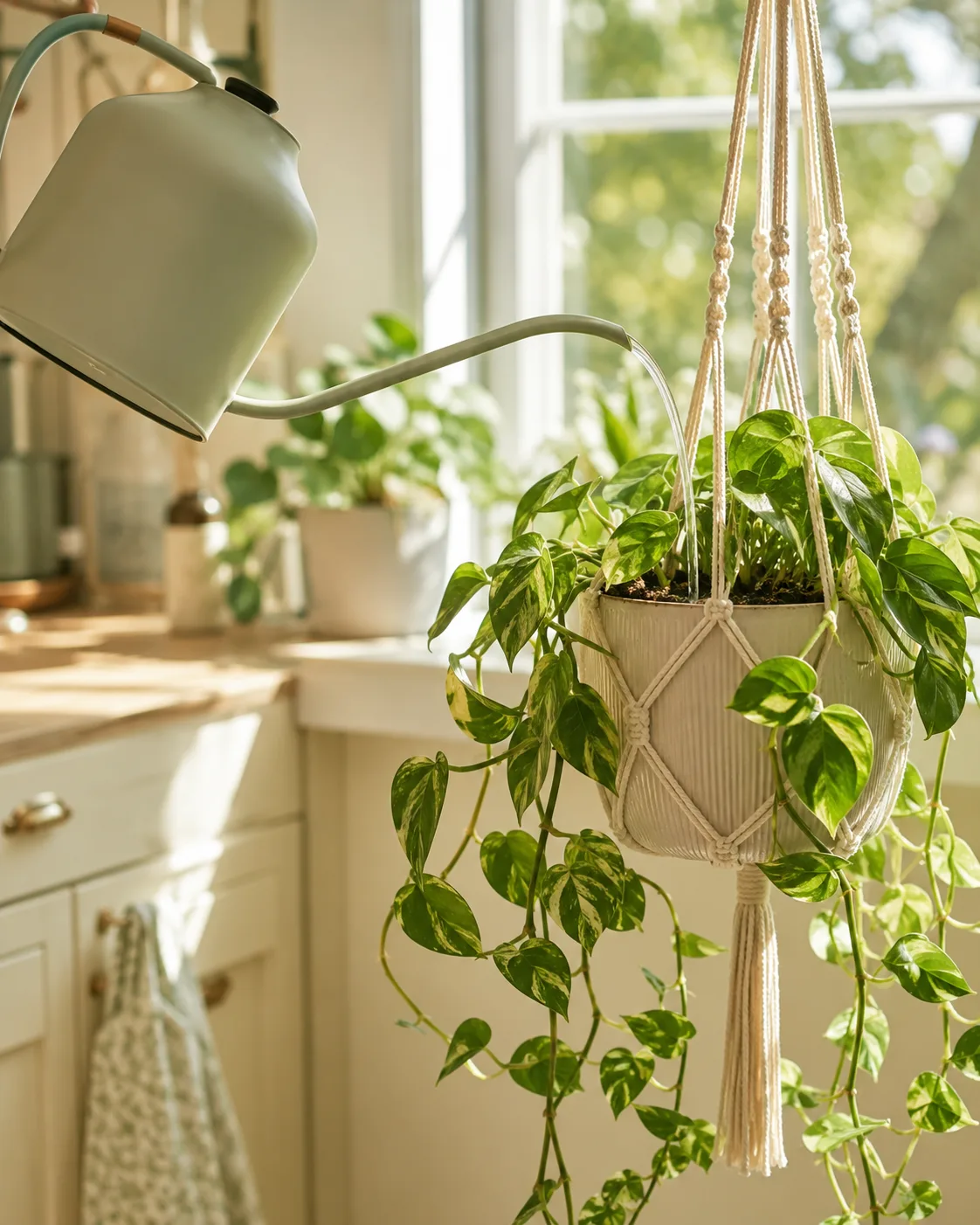
The short version: If your watering setup is a kitchen pitcher and a stretch on tiptoes, you're not alone, and you're also working harder than you need to.
If your watering setup is a kitchen pitcher and a stretch on tiptoes, you're not alone, and you're also working harder than you need to. Specific tools designed for plant watering exist for a reason: they let you direct water precisely, reach high or recessed plants without spillage, and water more often (which is what most struggling houseplants actually need). Here's how to choose tools that match your space and skip the ones that don't help.
Before the tool: how high is too high
Most indoor hanging baskets end up somewhere between 60 and 72 inches from the floor, which is roughly eye level to just overhead for an average adult. That range is the reason this problem exists at all: it is high enough that a standard can does not reach, and low enough that people convince themselves a chair will do.
It is worth being blunt about the chair. Reaching overhead while holding water shifts your balance at the exact moment both hands are busy, and a full can weighs more than people expect. This is the most common way a routine bit of plant care turns into an injury, and it is entirely avoidable with a tool that reaches instead.
The test is simple. If you cannot water a plant with both feet flat on the floor and the tool you own, you need either more reach or a lower hook. Buying more reach is usually the easier of the two.
The watering problem most homes have
A standard watering can is 6-10 inches long with a wide spout. It works fine for floor-level plants in open spaces. The problems start when plants are higher (a fern hanging at 8 feet, a planter on a tall shelf), tucked behind other plants (a tropical at the back of a window), or in narrow pots (a herb planter on a counter).
The common workarounds, climbing on chairs, removing the plant from its hook, pouring from the kitchen jug while squinting, all increase the risk of dropped water or dropped plants. They also discourage regular watering, which is one of the top reasons houseplants struggle.
The squeeze bottle solution
A long-spout squeeze bottle solves most awkward-watering problems with one $20 purchase. The spout reaches into pots without disturbing surrounding plants. The squeeze action gives precise control over flow rate (a few drops at a time, or a steady stream). The body holds 15-20 oz, enough to water a few plants per fill.
The bottle works for: hanging plants (point up, squeeze gently), tall planters where a watering can would tip, narrow herb pots, terrariums, succulents that want a focused trickle near the roots, and any plant tucked behind others where you need to thread the spout through foliage.
Look for: a spout at least 14 inches long, a clear or translucent body so you can see the water level, and a soft squeeze body (rigid plastic is harder to control). Capacity in the 15-20 oz range is the sweet spot, bigger gets too heavy when full, smaller requires too many refills.
Long spout, long neck or squeeze bottle
These three names describe the same problem being solved in slightly different ways, and shoppers use them interchangeably. The distinction that actually matters is how the water is pushed out, because that decides how much control you have with your arm extended above your head.
A long spout watering can pours by tilt. It gives a steady stream and suits larger pots, but a full can is heavy, and weight at arm's length is what turns a routine watering into a spill down the wall.
A long neck or squeeze bottle delivers water by hand pressure instead of tilt. You decide the flow directly, which makes it easier to aim into a pot you cannot see into properly. The squeeze bottle VEOJEIN carries is a 16.2 inch pair, which is the length that covers most standing height reaches without a step.
For indoor plants the narrow spout has a second advantage that has nothing to do with height: it lets you put water on soil rather than foliage, reaching behind furniture and past leaves that would otherwise get wet and stay wet.
Hanging baskets outdoors
Outdoor hanging baskets are the hardest case in this whole category. They are usually higher than indoor pots, they sit in moving air on all sides, and they dry out considerably faster than anything indoors. In summer that can mean daily watering rather than weekly.
Aim into the soil at the rim rather than over the crown of the plant. Water poured onto the middle tends to run straight off the foliage and out of the bottom, which looks like watering without actually wetting the root ball.
Go slower than feels necessary. Dry compost repels water before it absorbs it, so a fast pour mostly runs through and out. Two slower passes a minute apart will wet a basket properly where one fast pour will not.
Other tools worth having
A small standard watering can (1-2 quart) for floor plants. Pick one with a long spout and a removable rose (the perforated head). The rose gives you a gentle shower for seedlings; without it, you have a focused stream for established plants.
A spray bottle for misting. Some tropicals (calatheas, ferns, prayer plants) appreciate increased humidity. A daily quick mist takes 30 seconds.
A moisture meter ($10). Stick the probe in the soil and a needle indicates moisture level. More reliable than the finger test for new gardeners or for opaque pots where you can't see the soil. Skip the digital versions, analog ones are cheaper and more durable.
How to water specific plants well
Succulents and cacti: water thoroughly, then let the soil completely dry before watering again. Drainage matters more than frequency.
Tropical foliage plants (monstera, philodendron, pothos): water when the top inch is dry. Most prefer to dry out slightly between waterings.
Ferns: keep the soil consistently damp, never wet. Misting helps with humidity.
Orchids: ice cubes weekly is the easy method (one ice cube per week for phalaenopsis). Slow-release watering prevents overwatering.
Herbs (basil, parsley, cilantro): consistent moisture, they don't tolerate drying out. Water when the soil surface looks dry.
Outdoor pots in summer: daily watering in hot weather. Container plants dry out much faster than in-ground plants.
Common mistakes
Overwatering. The number-one cause of houseplant death. Symptoms: yellowing leaves, mushy stems, soil that smells off. Solution: let the plant dry out completely, then water less.
Watering on a schedule rather than by feel. Plants need more water in summer, less in winter; more in dry homes, less in humid ones. Touch the soil before watering.
Letting water sit in saucers. Plants left in standing water develop root rot. Empty saucers within 30 minutes of watering.
Watering leaves. Most plants prefer water on the soil, not the leaves. Wet leaves invite fungal problems and don't help the plant absorb water.
Frequently asked questions
How do you water high hanging plants without a ladder?
Use a tool that adds reach instead of adding height to you. A long spout can or a squeeze bottle with a long neck lets you deliver water from standing height into a pot above your head. The ladder is the thing most people are trying to stop using, and it is also where most watering accidents happen.
What is the best watering can for high hanging plants?
One with a genuinely long, narrow spout rather than a large reservoir. Capacity is the wrong thing to optimise for here: a full large can is heavy and hard to hold steady at arm's length above your head, which is exactly when spills happen. Reach and control matter more than volume.
Long spout can or squeeze bottle: which reaches further?
A squeeze bottle usually wins on control at height because you decide the flow with your hand rather than relying on tilt. A long spout can pours a steadier stream and suits larger pots. If the plants are above shoulder height, the squeeze bottle is generally the easier tool to aim.
How do you water outdoor hanging baskets without soaking everything below?
Aim into the soil at the rim rather than over the middle of the plant, and go slowly enough that the compost absorbs water rather than shedding it. Baskets dry out faster than indoor pots, so they usually need more frequent watering rather than more water at once.
Does a long neck watering can work for indoor plants too?
Yes, and it is often better indoors than a standard can. The narrow spout lets you reach behind furniture and past foliage to put water on the soil instead of the leaves, which matters more indoors where wet leaves dry slowly and can mark.
Is it safe to water high plants if you have balance problems?
Reaching overhead while holding a weight shifts your centre of gravity, and doing it on a chair or a step is where most watering falls happen. A long reach tool used from flat, stable footing removes the climb entirely. If you cannot water a plant without leaving the ground, the plant is hung too high for you and the honest fix is to lower it.
Which bottle size works best for hanging planters?
Something you can still hold steady with one arm extended. Water is heavy, and a large reservoir that is comfortable at waist height becomes unmanageable above your head. Refilling twice is easier than fighting a full bottle at full stretch.
Can you overwater a hanging plant?
Yes, though it is less common than with pots sitting on a surface, because most hanging baskets drain freely from the base. The usual sign is soil that stays wet for days along with yellowing lower leaves. If water is not running out of the bottom at all, drainage is the problem rather than the amount.
How do you handle hanging baskets when you are away for a week?
Move them out of direct sun and wind before you go, which slows drying more than any amount of extra water beforehand. Grouping baskets together also helps, since they hold humidity around each other. Soaking them heavily on the way out the door mostly runs straight through and does little by day three.