As an Amazon Associate, VEOJEIN earns from qualifying purchases made through links on this site. This never changes the price you pay.
The short version: Most curb-appeal advice assumes you have a weekend, a budget, and a clear plan. Real life rarely produces all three at once. The better approach is small consistent work, four weekends of modest projects that compound into a yard that looks deliberately cared for rather than recently renovated.
Most curb-appeal advice assumes you have a weekend, a budget, and a clear plan. Real life rarely produces all three at once. The better approach is small consistent work, four weekends of modest projects that compound into a yard that looks deliberately cared for rather than recently renovated. Each weekend below is 3-4 hours of work and $30-$100 in materials. By the end you'll have something that holds up year-round.
Weekend 1: cleanup and edging (~3 hours)
Start with subtraction, not addition. Walk the yard with a contractor bag. Pull weeds from beds. Remove dead plants. Take down any decoration that's faded, broken, or just tired-looking. The garden gnome from 2017 has earned retirement.
Then edge. Use a half-moon edger or a flat spade to cut a clean line between lawn and any flower bed, walkway, or driveway. The cut should be vertical, 2-3 inches deep, with the lawn side slightly higher. This single change has more visual impact than any plant addition.
Top off mulch in beds if needed. Mulch should be 2-3 inches thick, dark brown (not red), and not piled against tree trunks. A bag of mulch is $4-$5 at a hardware store; most beds need 2-4 bags.
Weekend 2: focal points (~3 hours, $40-$80)
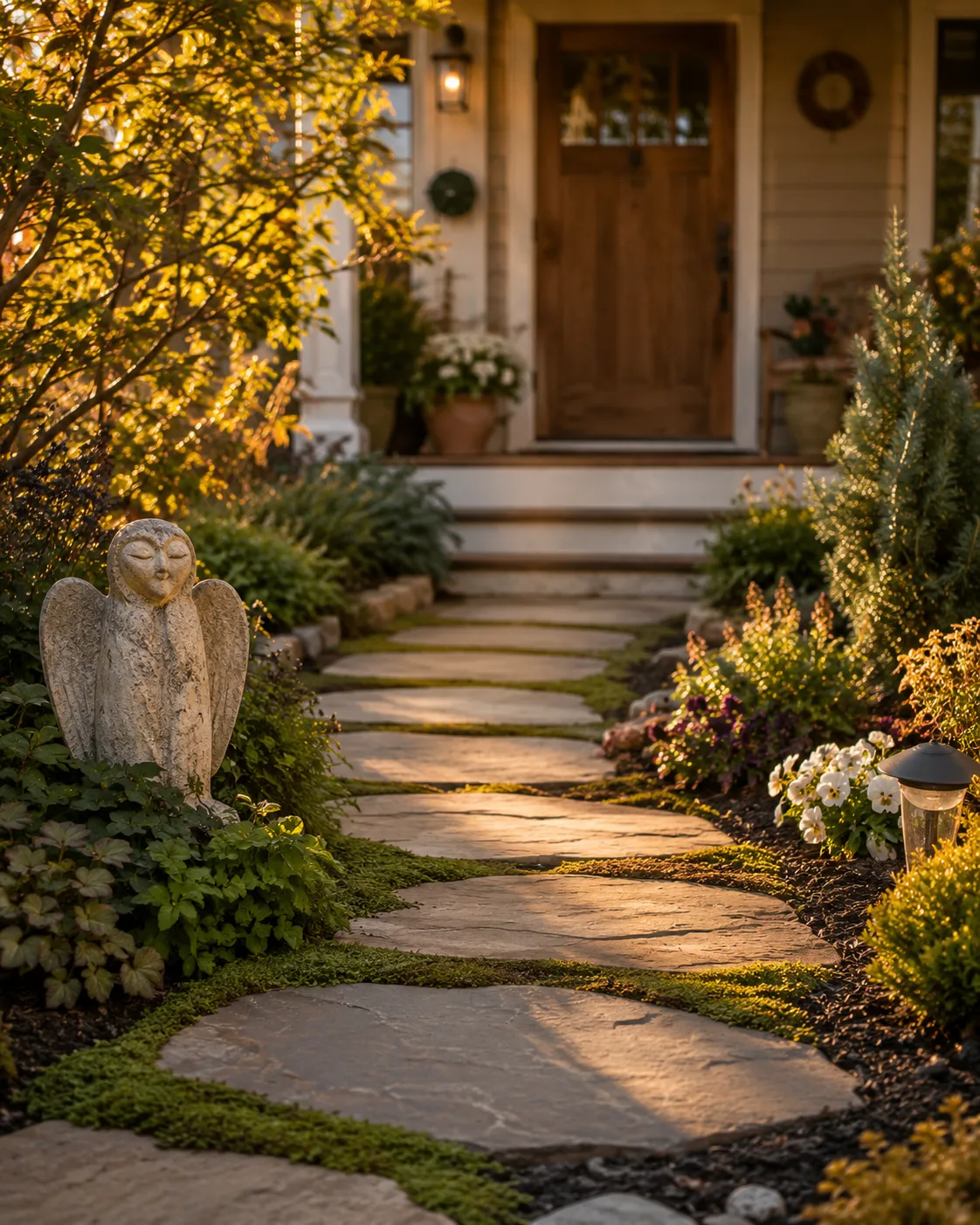
A yard with no focal points reads as a green expanse. A yard with one strong focal point reads as composed. Pick a single feature for this weekend: a garden statue, a memorial stone, a decorative bird feeder, or a substantial planter.
Place it where it can be seen from the most-used sight line, usually the front door or the kitchen window. The eye needs something to land on; the focal point gives it that.
A solar garden owl statue (~$25), a hand-painted memorial garden stone (~$25), or a 12-inch ceramic planter ($30-$50) all work in this role. Avoid anything overly themed (no plastic flamingos, no oversized cartoon characters). The piece should look like art, not like decoration.
Weekend 3: small plantings (~4 hours, $50-$100)
Plant three perennials. That's it. Resist the urge to plant a dozen, three deliberate placements outperform twelve scattered ones.
Choose plants that suit your conditions. Full sun: lavender, Russian sage, or coneflower. Partial shade: hostas, hellebores, or astilbe. Full shade: ferns or pachysandra as groundcover.
Plant in clusters of three (or odd numbers, 3, 5, 7) rather than single specimens. Group the same species together; mixed plantings look chaotic in small spaces. Water generously the first week, then weekly until established.
Weekend 4: details and seasonal additions (~3 hours, $30-$60)
The fourth weekend is small fixes. Repaint the front door if it needs it (a quart of premium paint and 2 hours). Replace porch lights if they're dated (modern fixtures are $40-$80 and significantly upgrade the entry). Add a new welcome mat ($20) and a seasonal garden flag ($10-$15).
Install a flag holder beside the walkway. A 12 × 18 inch double-sided burlap flag in the right seasonal motif signals that someone's paying attention to the yard, week-to-week. Swap monthly, it takes less than five minutes per swap and keeps the entry feeling fresh.
Final pass: stand on the sidewalk and look at the yard as a stranger would. What's the eye drawn to first? Is it the focal point you placed, or something dated or distracting? Adjust until the strongest visual element is the one you chose.
Maintenance: 30 minutes a week
The four weekends create a baseline. Maintaining it takes about 30 minutes a week: weed the beds, sweep the walkway, adjust the focal points or swap a flag.
Monthly: deeper weeding, top off mulch in worn spots, deadhead any spent flowers.
Seasonally: swap the flag, add seasonal pots if you do those, replace any plants that didn't make it.
Avoid the trap of expanding scope. Once a yard looks intentional, the urge to add more grows. Resist it. The same yard looks better at 80% of capacity than at 110%. Curated restraint reads as care; busy yards read as anxious.
Frequently asked questions
How much should curb appeal projects cost?
Realistically: $200-$500 spread across a season covers most meaningful improvements. Beyond that, you start hitting diminishing returns unless you're doing structural work (new walkway, fence replacement).
What single change has the biggest impact?
Edging, defining the line between lawn and bed cleanly. Free if you do it by hand, $30-$50 for a basic edging tool. A crisply edged yard reads as well-maintained even if the rest is modest.
When's the best time to start?
Early spring or early fall. Spring lets the season's growth fill in your work. Fall is gentler on plants and gives you a head start for the next year.
How long should plants take to look established?
First-year plantings look sparse. Second-year fills in. Third-year looks mature. Patience is the main ingredient, buying mature plants is expensive and they often struggle more than smaller ones.
Does adding a garden flag really help?
More than people expect. A seasonal flag in a small holder beside the walkway signals that the yard has someone paying attention to it. Cheap, easy to swap monthly, and it makes the entry path feel curated rather than generic.