As an Amazon Associate, VEOJEIN earns from qualifying purchases made through links on this site. This never changes the price you pay.
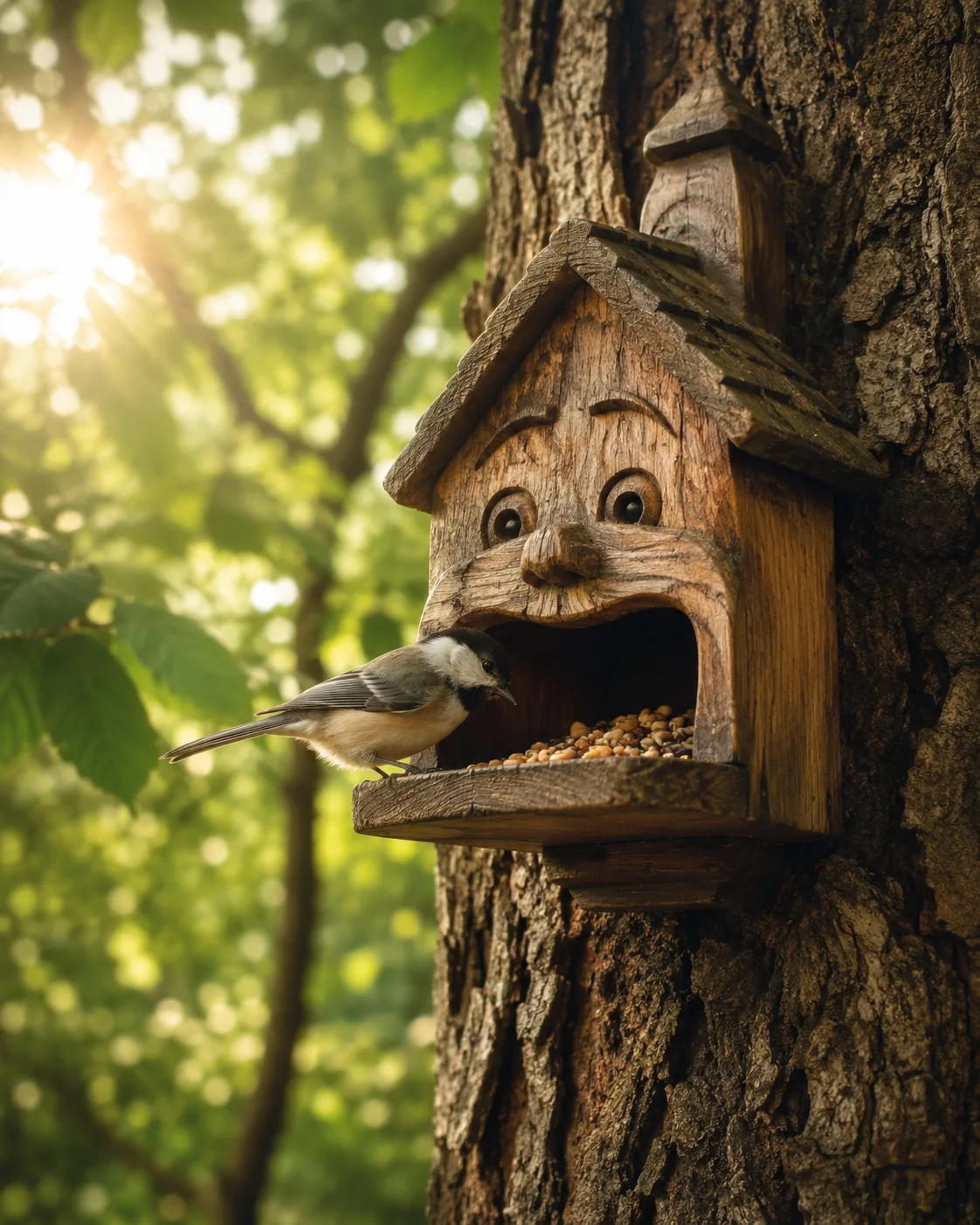
The short version: A tree face feeder works best as what it is: a small open bowl on a trunk. Fill it lightly with hulled sunflower or shelled peanuts, hang it about eye level within reach of cover, empty it after rain, and clean it every two weeks. Chickadees, nuthatches, titmice and small woodpeckers are the likeliest first visitors.
A tree face bird feeder is two things at once: a garden sculpture with a long folk history, and a small open dish of seed fixed to a trunk. Most advice treats it as one or the other. This guide covers both: where the face on the tree comes from, which birds will actually use a bowl on bark, and the placement, food and cleaning habits that decide whether it gets regular visitors or sits untouched for a season.
Where the face on the tree comes from
Faces made of leaves are a long-lived decorative motif, and medieval carvers loved them. Working in stone and wood, they put leafy heads, often with vines growing from the mouth, on roof bosses, column capitals and choir stalls in churches across England, France and Germany.
The name "Green Man" for these carvings is modern. It was coined in 1939 by the folklorist Lady Raglan in an article for the journal Folklore, and it stuck. What the original carvers meant by them is still argued over. The popular reading today is renewal: the living spirit of woods and gardens, returning every spring.
The resin tree faces sold as garden decor, sometimes called tree huggers, are a lighthearted descendant of that idea: a face that appears to grow out of real bark. Adding a seed bowl turns the piece from an ornament into something that also does a job. The VEOJEIN tree face bird feeder is built that way, an 11 by 8 inch hand-painted resin face with a seed cavity at the top and hangers on the back.
That dual role shapes everything else in this guide. It is a small open dish rather than a large sealed feeder, so it rewards little and often, and it sits on a trunk, so it suits a particular set of birds.
Which birds will use a bowl on a trunk
A feeder fixed to a trunk suits birds that already forage on bark and are comfortable landing on or clinging to a vertical surface. In most North American gardens the likeliest regulars are chickadees, nuthatches, titmice and small woodpeckers such as the downy woodpecker. These birds work tree trunks for insects anyway, so a bowl on the trunk sits right on their daily route.
Birds that prefer to feed in the open or on the ground, such as mourning doves, juncos and many sparrows, are less likely to use it. They will happily tidy up whatever falls below, which is one reason to keep a little clear ground under the tree.
Cardinals may stop by if there is a lip wide enough to stand on, but they generally prefer a flat platform or a hopper. If cardinals are the bird you most want to see, treat a tree face as a charming extra rather than your main feeder.
An honest note on squirrels. A feeder on a trunk is fully open to them, and no baffle can help because the squirrel is already on the tree. Either accept them as part of the show or choose foods they care less for, covered below.
Placement: height, cover and the window rule
Height. About eye level, roughly five feet up, works well. It makes an ambush from the ground harder, though a cat can still jump that high or climb the trunk, so the real protection is keeping cats away from the tree. It is also low enough that you can see into the bowl to check it and refill it without a ladder.
Cover. Small birds approach a feeder in short hops from cover and dive back into it when a hawk passes. A tree with branches or shrubs within about ten feet is ideal, and a lone tree in the middle of open lawn will be visited less. Dense shrubs directly beneath the feeder work against you, though, because they give cats a hiding place. A few feet of open ground below is the balance.
Windows. The guidance bird conservation groups have used for years is to put a feeder either within 3 feet of a window or more than 30 feet from it. Close to the glass, a bird leaving the feeder cannot build up enough speed to be badly hurt. Far away, it is less likely to fly at a reflection. The zone in between is the riskiest. For a tree face this usually means a tree well away from the house, which suits it anyway: it is meant to be seen across a garden.
Weather side. If you have a choice, hang the face on the side of the trunk sheltered from your prevailing wind and rain. An open bowl fills with water in a storm.
Kind to the tree. Whatever you hang it from, avoid wire or cord tied tightly around the trunk, which cuts into the bark as the tree grows. A single screw in a mature tree, or a loose strap you can adjust each season, does far less harm.
What to put in the bowl
A small open bowl means small amounts. A handful at a time, topped up often, beats filling it to the brim. Seed that sits for days in an open dish gets wet, clumps and spoils, and spoiled seed is worse for birds than none.
Hulled sunflower, sold as sunflower hearts or chips, is the best all-round choice. Nearly every seed-eating garden bird takes it, and with no shells there is far less mess under the tree.
Shelled, unsalted peanuts are a favorite of exactly the birds a trunk feeder attracts: nuthatches, chickadees, titmice and woodpeckers. They are also a favorite of squirrels. Because the bowl is open to rain, offer only a few at a time and throw out any that get damp or look moldy, since damp peanuts can grow a mold toxin that is harmful to birds.
Safflower is the answer if squirrels are clearing the bowl. Many squirrels and grackles show little interest in it, while chickadees, titmice and cardinals take it readily.
In cold weather, suet nuggets or pellets add the fat that woodpeckers and nuthatches need. Skip soft suet in summer heat, when it can go rancid.
Leave out bread, salted or roasted snack nuts, and cheap mixes padded with milo and cereal filler, which most feeder birds flick onto the ground uneaten.
The first few weeks, and keeping it clean
Expect a wait. A new feeder can take anywhere from a few days to a few weeks to be found. Leave it where it is, because moving it resets the clock. A few seeds scattered on the ground below can help the first birds notice it.
Clean it about every two weeks, and more often in wet or warm weather or whenever the seed has clumped. Empty the bowl, scrub it with hot soapy water and a brush, then wipe the bowl with a solution of one part household bleach to nine parts water, the mix wildlife agencies recommend. On a hand-painted piece, keep the bleach to the bowl, leave it on for no more than a few minutes, rinse thoroughly with clean water, and let it dry fully before refilling.
This matters more than any other habit. Dirty, crowded feeders spread disease between birds. Outbreaks of salmonellosis among pine siskins and other finches have been linked to feeders, and in 2021 wildlife agencies in several US states asked people to take feeders down for several weeks to slow one. If you see birds that look fluffed up and sluggish at your feeder, take it down, clean it, and wait two weeks before putting it back.
Finally, a shallow dish of fresh water nearby often brings in more species than food alone, especially during winter freezes and summer heat. For more ways to keep a garden lively once the flowers are gone, see winter garden decor.
Frequently asked questions
What does a tree face on a tree mean?
Tree faces echo the Green Man, the leafy face carved into medieval churches across Europe and read today as a symbol of nature and renewal. Garden tree faces are a lighthearted modern version: a face that seems to grow out of the bark. One with a seed bowl also feeds the birds that visit the tree.
Which birds use a tree face bird feeder?
Mostly birds that already forage on bark. In North American gardens the likeliest regulars are chickadees, nuthatches, titmice and small woodpeckers. Ground feeders such as doves and juncos tend to eat what falls below instead.
How do you keep squirrels off a feeder mounted on a tree?
You cannot keep them off completely, because the squirrel is already on the tree and no baffle protects a trunk. The practical fixes are small amounts at a time and safflower seed, which many squirrels show little interest in.
How high should a tree face feeder be hung?
About eye level, roughly five feet up. That makes an ambush from the ground harder and lets you see into the bowl to check and refill it. A cat can still jump that high or climb the trunk, so keeping cats away from the tree matters more than height.
How often should you clean a bird feeder?
About every two weeks, and more often in wet or warm weather or whenever seed has clumped. Scrub it with hot soapy water, wipe the bowl briefly with a solution of one part bleach to nine parts water, rinse well with clean water, and let it dry before refilling.