As an Amazon Associate, VEOJEIN earns from qualifying purchases made through links on this site. This never changes the price you pay.
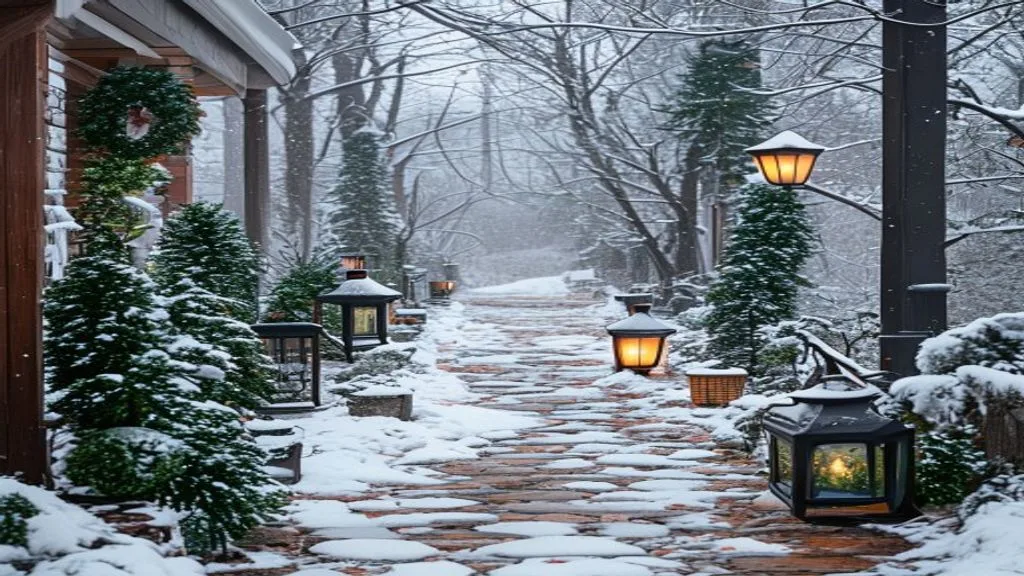
The short version: December to March is the gardener's hardest stretch. The beds are brown, the perennials are bare, and the evergreens are doing most of the visual work alone. Most people just give up and wait for spring, but a winter garden that's actually planned looks better than a summer garden that wasn't.
December to March is the gardener's hardest stretch. The beds are brown, the perennials are bare, and the evergreens are doing most of the visual work alone. Most people just give up and wait for spring, but a winter garden that's actually planned looks better than a summer garden that wasn't. The trick is shifting from 'plants as the show' to 'structure, statuary, and small light' as the show. Here's how to keep your yard beautiful through the dormant months.
The shift: structure beats color in winter
In summer, color does the heavy lifting, flowers, vibrant foliage, bright accents. In winter, with no color available, *structure* takes over: shapes that read against snow or bare ground, vertical lines that draw the eye, and focal points that anchor an otherwise flat scene.
This is why a winter garden with one striking statue, two evergreens, and a path lantern can look better than a summer garden cluttered with petunias. Subtract the visual noise of flowers and the structural pieces finally get to shine.
The mindset shift: stop trying to make winter look like a fading summer. Make it look like winter, intentionally.
Statuary that holds up across all four seasons
Garden statues are the workhorses of winter decor. They look great in summer (peeking through perennials), but they truly come into their own in winter when nothing else is competing for attention.
Best choices: owl statues, angels, family-tree stepping stones, and other 'sculptural' resin or stone pieces. They're visible from the house all winter, they catch snow beautifully on the shoulders/heads, and they give the yard a focal point.
Material matters. Quality cast resin and concrete handle freeze/thaw cycles. Cheap hollow plastics crack. Real stone is heaviest and most permanent. For most homeowners, weather-treated resin is the right balance of durability, weight, and price.
Position one large statue at a sightline visible from the kitchen window or front door. That single piece will give you 4 months of visual interest, daily.
Evergreens, your only living color source
Plant at least three evergreens (any species) where you can see them from inside. Boxwood, holly, juniper, dwarf spruce, or even a single arborvitae goes a long way.
Variegated evergreens (gold-tipped junipers, holly with red berries) add color in months when nothing else does. The bright spot of red holly berries against snow is one of the underrated joys of winter landscaping.
If your yard has no mature evergreens, plant a few small ones this fall. In 3 years you'll have winter structure that took zero effort to enjoy.
Seasonal flags, easy, high-impact, low-cost
A winter-themed garden flag (cardinal, snowflake, pinecone, winter cabin) is the cheapest way to add color and intentionality to a sleeping yard. Costs $4-8. Takes 30 seconds to install on a stand.
Rotate two winter flags through December–March, one early winter, one late winter, and your yard signals the season is being attended to even when the plants aren't doing anything.
Combine: statue + flag + path lantern + one evergreen = a complete winter vignette.
Lighting, the move most people skip
Winter days are short. Most of your time looking at the yard is during low light, early morning, dusk, or evening. Outdoor lighting is what makes the yard 'on' during those hours.
Cheapest impact upgrade: solar path lanterns (around $30 for a 6-pack) lining a walkway or garden bed edge. They charge in even weak winter sun and give 4-6 hours of glow at dusk. They look great covered in light snow.
Mid-level: warm-white LED string lights wrapped around bare deciduous branches or wound through an evergreen. Far better than cool-white, warm lights make winter feel cozy, not cold.
Splurge: a single up-lit statue or focal-point shrub. One LED uplight pointed at your owl statue at dusk makes the yard look professionally designed.
Don't over-light. A few intentional warm-white sources beat a flood of bright cool-white every time.
Frequently asked questions
Will resin garden statues crack in freezing weather?
Quality resin garden statues are formulated for freeze/thaw. They survive winters well as long as they're not submerged in water (which can freeze inside hollow voids). VEOJEIN's outdoor statuary is rated for freezing temperatures.
Should I bring decorations inside for winter?
Statues, flags, and stepping stones, leave them out. They're built for it. Terracotta pots, glass orbs, and ceramic accents, bring those in (freeze damage is real on porous materials).
How do I keep solar lights working through cloudy winters?
Pick lights with replaceable rechargeable batteries (most are NiMH AA). After a stretch of cloudy days, the batteries deplete faster than they recharge. A simple battery swap once mid-winter keeps everything running.
What's the single highest-impact thing I can add this winter?
One large focal-point statue, lit at dusk with a $20 solar uplight, viewable from your most-used window. That single combo upgrades your winter view more than anything else for the money.
When should I start prepping the winter look?
Mid-November in most US zones. Get the flag swapped, the statue cleaned, and the lights tested before the first real snow. Doing it in advance means the first snowfall makes everything look great instantly.