As an Amazon Associate, VEOJEIN earns from qualifying purchases made through links on this site. This never changes the price you pay.
The short version: Garden flags are one of the smallest decorating changes that have an outsized effect. Swapping a 12 × 18 inch double-sided flag every few weeks keeps a yard feeling looked-after and changes the mood of a porch faster than any wreath or planter.
Garden flags are one of the smallest decorating changes that have an outsized effect. Swapping a 12 × 18 inch double-sided flag every few weeks keeps a yard feeling looked-after and changes the mood of a porch faster than any wreath or planter. The question new flag-owners always ask is which flag to put up when, and the answer isn't on every package. Here's a complete calendar.
How to think about garden flags
Garden flags work in two modes. Holiday flags are short-runway, they go up a week or two before the holiday and come down a few days after. Seasonal flags are long-runway, they stay up for the whole season and signal mood rather than a specific date.
Most homeowners cycle through 10–12 flags per year. A standard 12-pack covers every major US holiday plus the four seasons, which is why bundled sets are popular.
If you have one flag pole and 12 flags, you'll spend about 30 minutes a year swapping them. Less than five minutes per swap. That's the actual time investment for a year of changing curb appeal.
January, winter and new year
January is the longest "hold" of the year. Take down the Christmas flag the first week. Put up a winter or snowflake design that stays through February.
Avoid: anything specifically New Year's-themed after January 5. It looks stale.
Good designs: snowflakes, winter scenes, cardinal birds (a popular winter motif), or just an abstract pattern in cool blues and whites.
February, Valentine's Day
Valentine's flags go up around February 1 and come down February 16. Eleven days. Keep it short because a heart flag in March feels neglected.
If you have a Black History Month flag, fly it for the full month. The two designs don't conflict.
After Valentine's: bridge back to a winter or generic floral design until March.
March, St. Patrick's & first spring
March 1–18: a St. Patrick's Day flag (shamrocks, leprechauns, or just a green-and-gold abstract).
March 19–31: switch to a spring or floral design. This is when many people first put out tulip or daffodil flags as a signal that warmer weather is coming, regardless of actual temperature.
Pro tip: spring flags hide winter-killed grass and bare flower beds well, they redirect the eye to colour even when the garden itself isn't ready.
April, Easter, springtime
Easter dates shift, but the Easter flag typically goes up the week before Easter and comes down the week after.
Outside the Easter window: spring florals, birds, butterflies, or rain-and-umbrella designs (popular in April).
Mother's Day is in May for the US but worth keeping in mind, start a softer floral palette by late April so the transition feels intentional rather than abrupt.
May, Mother's Day, Memorial Day, summer hints
Mother's Day flags: the week before through the day. Then back to general florals.
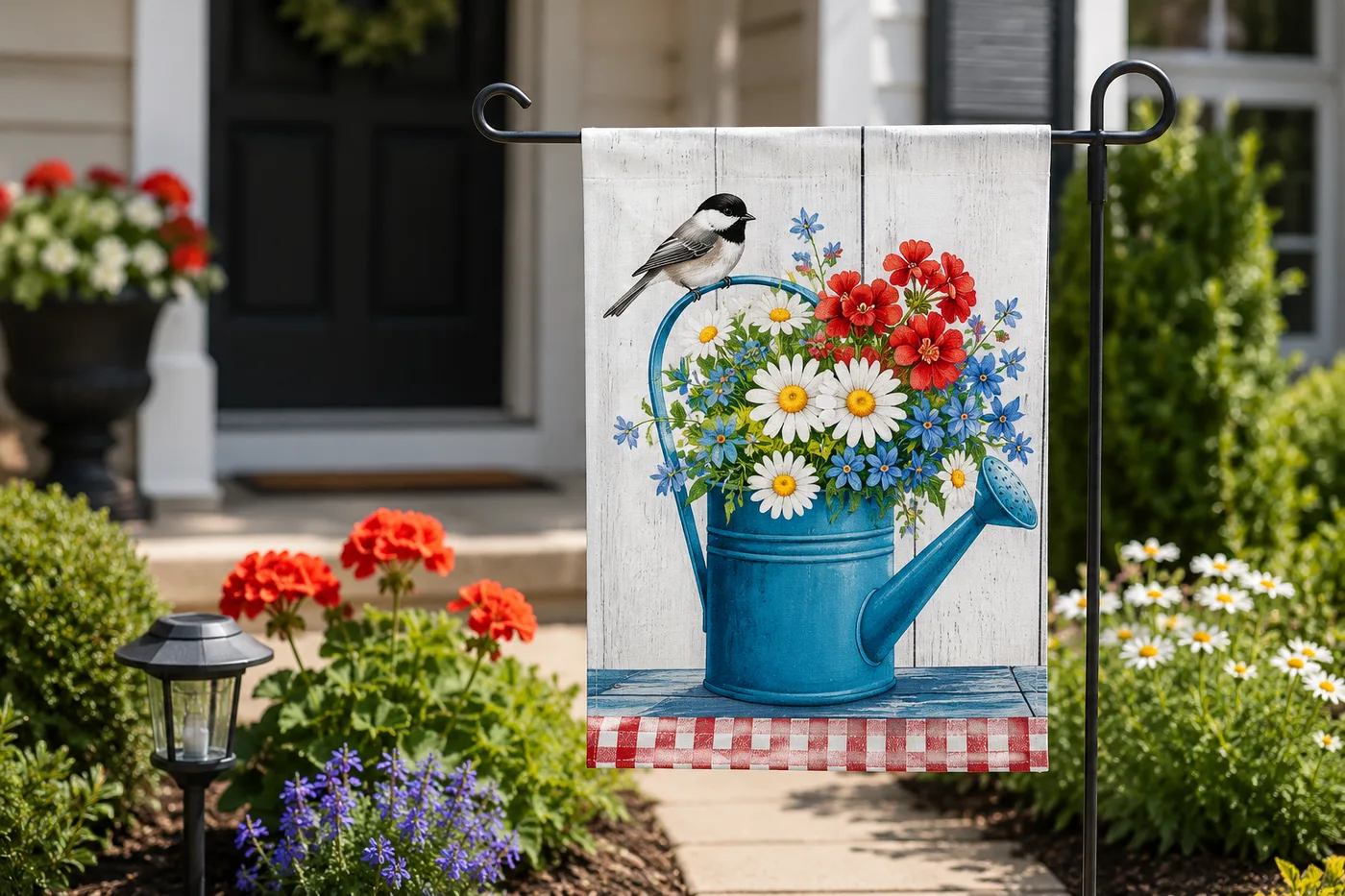
Memorial Day (last Monday in May): U.S. flag or patriotic floral designs (red, white, and blue with summer florals).
By late May, summer flags can come out, sun, beach, lemons, sunflowers, anything bright and warm.
June, July, August, summer
Summer is a long runway. One flag can comfortably cover June, swap to a 4th of July patriotic flag for the first two weeks of July, then back to summer for the rest of the season.
Beach-themed flags work in coastal areas; sunflower or garden-themed flags work inland.
August is the trickiest, too late for summer florals, too early for fall. A neutral garden or bee/butterfly flag bridges the gap.
September, October, back-to-school, fall, Halloween
Early September: back-to-school flags work for the first two weeks if you have school-age kids. Otherwise transition straight to fall.
Mid-September through mid-October: fall flags, pumpkins, leaves, harvest themes.
Last two weeks of October: switch to a Halloween flag. Witches, ghosts, skeletons. Pumpkin flags can keep going through November.
November, Thanksgiving, gratitude
Early November: a thankful or harvest flag, turkey, cornucopia, or a simple "give thanks" message.
Day after Thanksgiving (or December 1): time to start winter or holiday flags. Earlier than that and it feels rushed.
December, holidays
Christmas, Hanukkah, Kwanzaa: pick the design that fits your household.
Generic winter holiday designs (snowflakes, candles, abstract red-and-gold) work in any household and stay relevant from December 1 through January 1.
December 26 onwards: keep a winter flag (not specifically Christmas) up until the New Year, then start the cycle over.
How to make flags last
Two big factors kill garden flags: UV from the sun, and wind whipping.
Premium flags use UV-resistant inks and burlap or heavy polyester. They hold colour for 2–4 seasons.
Cheap flags are nylon with surface-printed designs. They fade in one summer.
Wind: if your yard is windy, install a stainless steel pole anti-wind clip. It costs $5 and stops the flag from wrapping around the pole and tearing.
After heavy rain: let the flag dry on the pole. Don't fold it wet, burlap mildews.
Store off-season flags flat in a labelled bin in a cool, dry place. Hung flags develop creases.
Frequently asked questions
How long should I fly a flag before changing it?
Two to three weeks is the typical cadence for most flags. Holiday flags can stay up for the week of the holiday plus a few days on each side. Seasonal flags (winter, summer) can stay up for the season.
How long do garden flags actually last outdoors?
Premium burlap or polyester flags last 2–4 outdoor seasons before colors fade. Cheap nylon flags fade in one summer. Double-sided printing helps because the inside layer protects the outside.
Should I take flags down at night?
Not necessary. Modern garden flags are weatherproof. They survive rain and wind fine. Only take them down for severe weather (high winds, hail) to save them from tearing.
Can I fly an American flag in my garden flag holder?
U.S. flag etiquette technically requires American flags to be flown above other flags and lit at night. Most people treat garden flags as decorative and use the patriotic version for the holiday week only.