As an Amazon Associate, VEOJEIN earns from qualifying purchases made through links on this site. This never changes the price you pay.
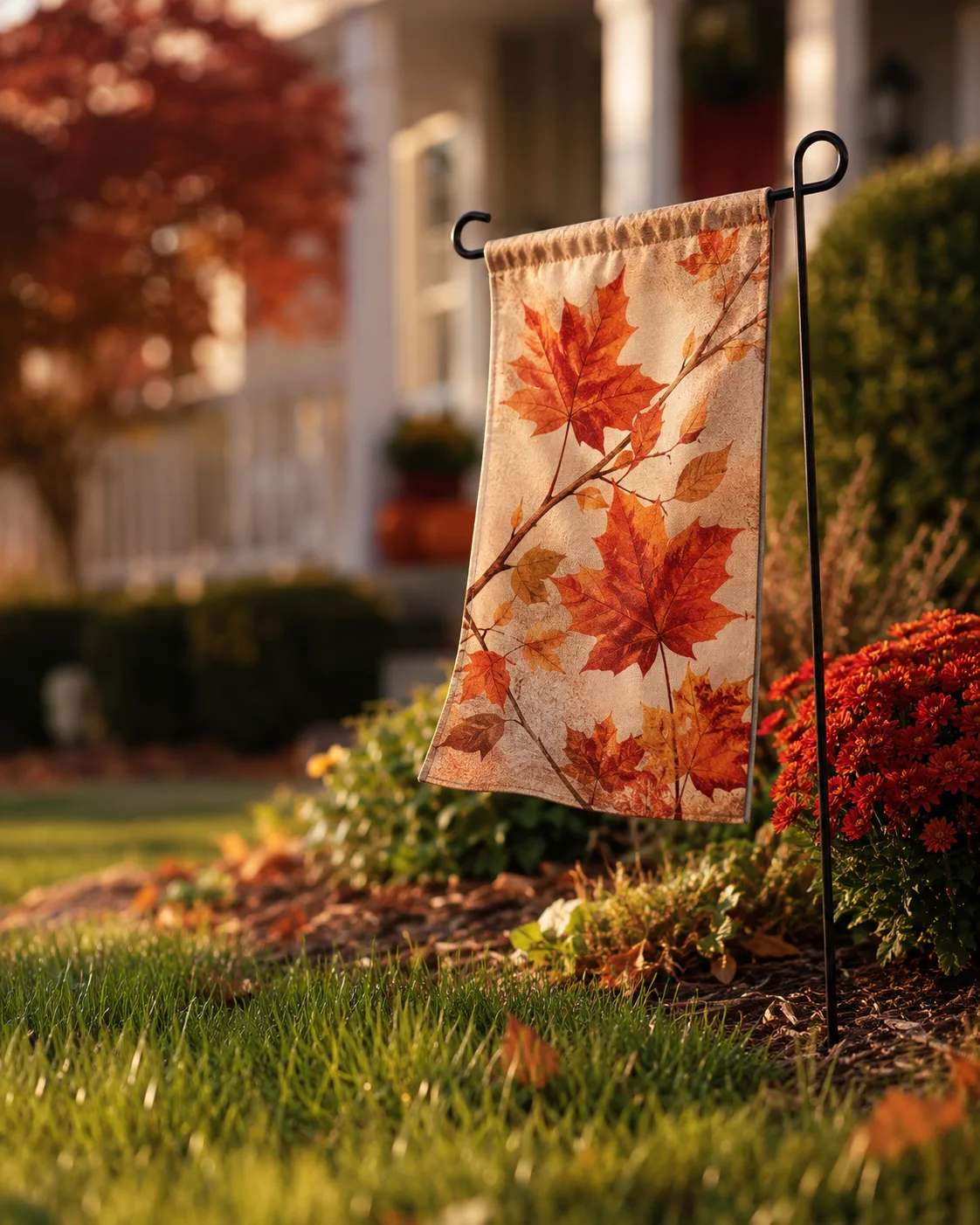
The short version: Garden flags look like a small thing, a $4 panel on a metal stake. But ask anyone whose parents put a different flag out every season, and they'll tell you the flag was the marker of the year. Pumpkins out: it's officially fall. Easter bunny up: Mom is making lamb on Sunday. Halloween cat: trick-or-treat tomorrow.
Garden flags look like a small thing, a $4 panel on a metal stake. But ask anyone whose parents put a different flag out every season, and they'll tell you the flag was the marker of the year. Pumpkins out: it's officially fall. Easter bunny up: Mom is making lamb on Sunday. Halloween cat: trick-or-treat tomorrow. The seasonal flag becomes a household calendar that kids absorb without anyone explaining it. This guide is about turning a generic yard accessory into a real, lasting family ritual.
Why this small ritual works
Tradition isn't built from big once-a-year events. It's built from low-effort, high-frequency markers, small things that repeat and become 'the way our family does it.' The garden flag is almost perfect for this: it changes naturally with the calendar, it's visible from the street (others see your family's rhythm), and it takes 30 seconds to swap.
Kids in particular anchor to visible markers. The flag changing means 'something is coming.' Halloween flag goes up, they know costumes are next. Spring tulip flag goes up, they know we're going to the nursery soon. That sequence becomes memory the same way recipes become memory.
When the kids grow up and visit, the flag is still there. And one day they're putting their own flag out, and they're remembering yours.
Starting the tradition, what to do month one
Buy a multi-pack, not single flags. A 12-pack of seasonal flags costs less than buying four singles over a year, and you'll be set for ages. Pick a pack that covers all four seasons plus the major holidays your family marks.
Get a good stand. This is where most people skimp and regret it. A flimsy stake bends in the first storm and the flag ends up in the neighbor's yard. Spend $15-25 on a powder-coated metal stand with deep ground spikes. It'll outlast the flags.
Pick a swap day. Some families swap the first of each month. Others swap the first weekend. Pick something predictable so the kids notice when it happens. Make it part of the family routine, 'flag day.'
Let the kids pick. From month two onward, let one of the kids choose which flag goes up next. Tiny act of authority, huge investment in caring.
Making the flag last outside
Cheap garden flags fade in one summer. Better flags last 3-5 years with seasonal rotation. Quality factors:
Fabric. Double-sided polyester with reinforced edges lasts roughly 3x longer than single-sided cheap nylon. UV-resistant dyes are the difference between 'reads great after 2 years' and 'looks like a ghost after 4 months.'
Construction. Look for reinforced top sleeve (the part that loops around the stand bar), double-stitched edges, and bar-tack reinforced corners. If the corners are single-thread, the wind shreds them in a season.
Storage. When a flag isn't in use, fold it flat (don't crumple) and keep it dry. Out-of-rotation flags stored damp will mildew. A labeled storage bin in the garage keeps the year's worth of flags tidy and ready.
Rotation hygiene. Don't leave a flag up for the entire year. Most fading happens in months 4-6 of continuous sun. Two-month rotation = each flag gets 2 months of sun per year, which extends life dramatically.
Making it a teaching moment too
The flag swap is a natural chance to mark holidays kids don't otherwise notice. Putting up the Memorial Day flag becomes a 5-minute conversation about what the day means. Veterans Day, Independence Day, lunar new year, the start of fall, each flag invites a short, age-appropriate explanation.
Better than a calendar reminder: the kids see the flag, and they're the ones who ask why we're putting up the orange one this week. They're driving the question. That's how the answer sticks.
Bonus version: keep a small notebook by the flag stand. Each flag swap, jot the date and a one-sentence note ('first frost,' 'Sarah lost her tooth,' 'Dad got the promotion'). Five years in, the notebook is a family chronicle keyed to flag changes.
Common mistakes that kill the tradition
Buying only the popular flags. A pack of only Halloween + Christmas leaves you with 10 boring months. Cover the whole year, fall foliage, winter cardinals, spring tulips, summer sunflowers, fall pumpkins, harvest, etc.
Leaving one flag up too long. Even a beautiful flag becomes invisible after 6 weeks. The whole point is that it changes.
Using flimsy stakes. Replace immediately if your stand bends in a storm. A toppled flag in the lawn is the opposite of a tradition.
Forgetting to involve kids. If you swap the flags secretly while they're at school, it becomes Mom or Dad's quirky thing. If they help, it becomes their thing too.
Frequently asked questions
How long do good garden flags last?
Quality double-sided UV-treated flags rotated through a 12-pack last 3-5 years apiece. Cheap single-sided flags last about one season. Spend the slightly higher upfront, the per-year cost is lower.
Will the flags survive winter?
Yes, if the flag is designed for outdoor use and the stand is properly anchored. Winter flags actually have it easier than summer flags, less UV exposure. The bigger risk is heavy snow loading on the stand.
Can I customize a garden flag for our family?
Custom-print services exist (Vistaprint, Spoonflower). The trade-off: custom flags are usually less weather-durable than mass-produced ones. A hybrid approach, buy quality seasonal flags and a single custom flag for one special occasion, works well.
What about wind? Won't strong gusts tear them?
Quality flags have wind vents (small slits or open weave) that release pressure during gusts. If your area gets sustained 40+ mph winds, take flags down temporarily during storms, the stand may survive but the flag will fray.
How many flags does a full year really need?
Minimum 6 (covers two-month rotations). Ideal: 12 (one per month, with extras for major holidays). Most families settle around 10-12 once the tradition is established.