As an Amazon Associate, VEOJEIN earns from qualifying purchases made through links on this site. This never changes the price you pay.
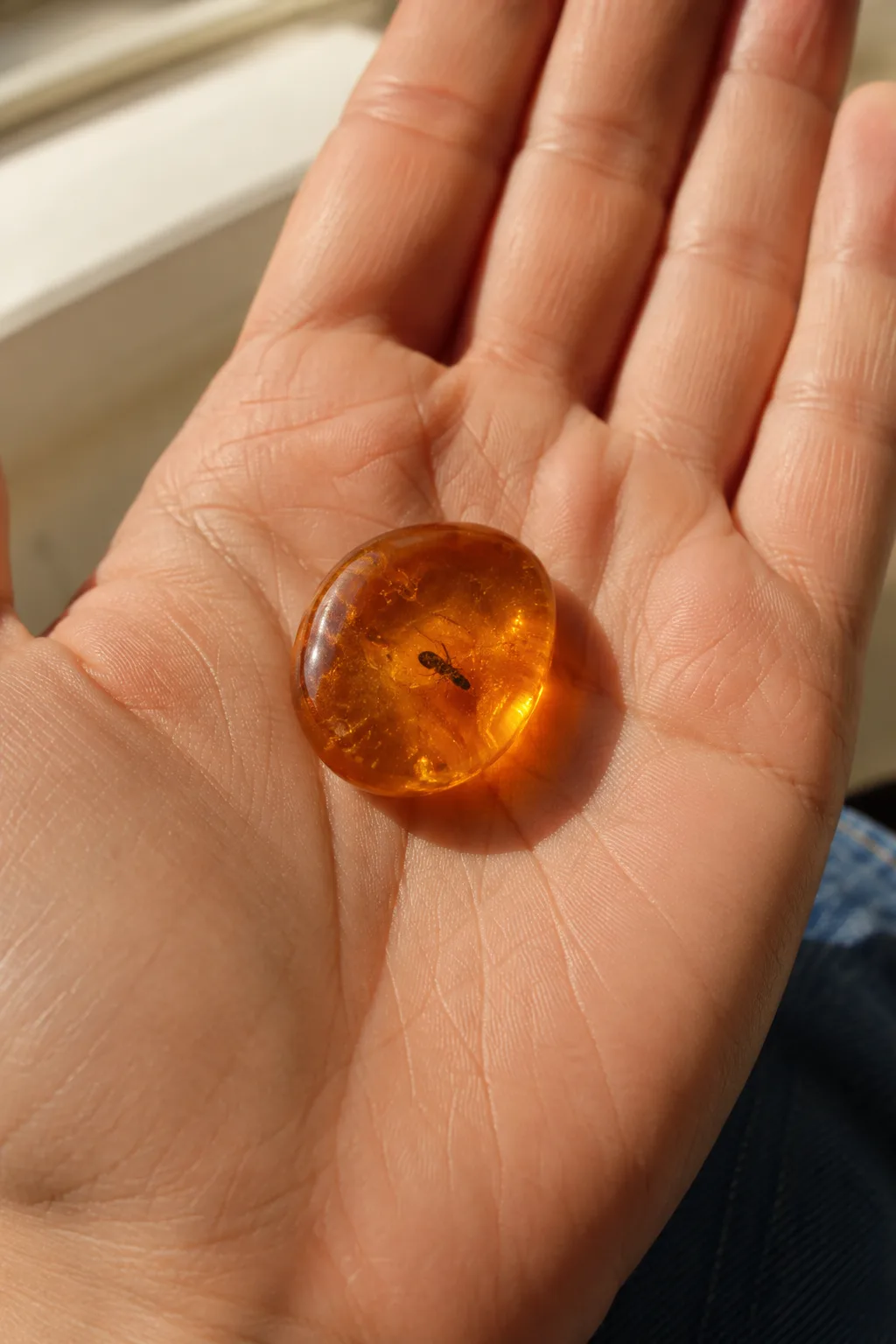
The short version: Amber isn't one color. It's a family. Same fossilized tree resin, but trapped over 30 to 90 million years it picked up minerals, oxidation, plant matter, and microbubbles that pushed each piece toward cognac, honey, lemon, cherry, or, rarest, green.
Amber isn't one color. It's a family. Same fossilized tree resin, but trapped over 30 to 90 million years it picked up minerals, oxidation, plant matter, and microbubbles that pushed each piece toward cognac, honey, lemon, cherry, or, rarest, green. Color matters when you're buying: it tells you something about origin, treatment, and how a piece will read under display lighting. This guide walks through what each color comes from, what's natural vs. heat-treated, and how to pick a tone that suits your space.
Where amber color comes from
amber starts as resin, sticky, golden-yellow, dripping from the trunks of ancient pine or kauri-relative trees. Over millions of years buried in sediment, that resin polymerizes (the molecules link into longer chains) and slowly changes color depending on pressure, temperature, and what's around it in the ground.
The two biggest variables are oxidation and inclusions. Resin exposed to oxygen (even microscopically) turns darker, that's cognac and cherry. Resin that polymerized in low-oxygen mud stayed pale, that's lemon and pale honey. Mineral contamination (iron, copper compounds) can shift tones toward red or green. And tiny gas bubbles trapped during the original drip can make a piece cloudy or even white.
Color isn't a quality grade, it's a fingerprint of where and how a piece formed. A clear honey amber and a cloudy white amber are both real; they just had different histories.
The main colors and what they mean
Lemon (pale yellow): the rarest natural tone in Baltic amber. Lemon amber means low oxidation, pieces buried fast in cold, anaerobic mud. Reads cool, almost crystalline under light. Some lemon amber on the market is actually heat-clarified (more on that below).
Honey (golden): the classic amber color. Mid-range oxidation. Most Baltic museum pieces are honey. Reads warm under any light. The 'default' amber color most people picture.
Cognac (deep amber-brown): heavily oxidized honey amber. Older surface layers, or pieces exposed to slow oxygen leak. Reads rich and almost translucent-brown like good whiskey.
Cherry (red-brown): very high oxidation plus iron compounds. Natural cherry is rare; most cherry on the market is heat-treated honey.
Green: extremely rare. Caused by suspended micro-bubbles scattering light (Rayleigh-style) plus organic plant matter. Most 'green amber' on jewelry counters is treated Dominican amber. Authentic Baltic green is collector-grade and priced accordingly.
White / Royal white: cloudy white from millions of tiny gas bubbles. Highly prized in Baltic markets, especially for carving.
Natural color vs. heat treatment
Most cherry, green, and 'clarified' lemon amber on the market has been heat-treated. This isn't fraud, it's been done since the 1700s and it's an industry-standard process. Heat clarifies cloudy amber (boils out trapped bubbles) and can shift color from honey toward cognac, cherry, or red.
Heat-treated amber should be sold as 'clarified' or 'enhanced', not 'rare natural cherry.' If a seller advertises a deep red piece as 'natural untreated Baltic cherry' at a regular honey-amber price, you're being misled.
For display pieces, heat-treated is fine, the resin is still genuine, the inclusion (if any) is still authentic. For investment-grade collecting, you want untreated, ideally with provenance documentation.
VEOJEIN's amber-style pieces are clearly described as resin replicas, purpose-built for display, not sold as treated fossil amber.
Picking the right color for your space
Color reads completely differently under warm 2700K bulbs vs. cool 4000K daylight. Honey amber under 2700K looks golden and inviting; under 4000K it can look yellow-green. Cognac under 4000K looks like good single-malt; under 2700K it warms into red.
Quick rules: warm-lit rooms (living rooms, bedrooms), honey or cognac. Cool/daylight rooms (offices, kitchens with north windows), lemon or pale honey. North-facing rooms with no lamps, go cognac so the piece doesn't disappear into the gray.
If you're picking an amber piece as the focal accent in a neutral room, cognac reads as the most expensive, it's deep enough to anchor the eye but not so dark it loses its translucency.
Buying checklist, what to ask
1. Is it natural color or heat-treated? Any honest seller will answer this directly.
2. Is it Baltic, Dominican, or Burmese? Baltic is mainstream and ethical. Dominican is often dyed-cleared and has different inclusions. Burmese amber has serious ethical concerns (see our amber ethics guide).
3. What lighting will it live under? Bring a phone-light if you're buying in person, match the bulb temperature of where the piece will sit.
4. Is the inclusion (if any) intact, or partially exposed at the surface? Surface-exposed inclusions degrade faster.
5. For replicas: is the resin UV-stable? Cheap resin yellows in 18 months. Quality cast resin holds color for decades.
Quick reference: amber colors at a glance
| Color | Typical origin | Natural vs treated | Best lighting | Best use case |
|---|---|---|---|---|
| Lemon (pale yellow) | Baltic | Mostly heat-clarified | 2700K-3000K warm | Bright/cool rooms, kitchens |
| Honey (golden) | Baltic (most common) | Mostly natural | 2700K warm | Living rooms, default choice |
| Cognac (deep brown-amber) | Baltic, sometimes Dominican | Often heat-darkened | 2700K-4000K | North-facing rooms, executive desks |
| Cherry (red-brown) | Burmese (natural), Baltic (treated) | Mostly heat-treated | 2700K warm | Dramatic display pieces |
| Green | Dominican (rare) | Usually treated | 4000K daylight | Collector pieces, statement display |
| Royal white | Baltic | Natural (gas bubbles) | 3000K-4000K | Carving, sculptural pieces |
Frequently asked questions
Is darker amber more valuable than lighter amber?
Not automatically. Rarity drives price more than darkness. Natural lemon, natural cherry, and authentic green are all rarer (and pricier) than mid-tone honey. Cognac is common because heat treatment can produce it from any honey amber.
Why does my amber piece look different in photos than in person?
Phone cameras over-saturate warm tones. Honey amber photographs more orange than it looks. View any amber piece in the actual lighting where it'll live before committing.
Can I change the color of amber I already own?
Don't try. Home heat-treatment ruins amber 9 times out of 10, uneven oxidation, cracks, and lost transparency. Color shifts are done in pressurized inert-gas ovens, not kitchen ovens.
What color is the amber in the famous 1993 dinosaur film?
The fictional 'mosquito-DNA' amber from the films is warm cognac-honey, a classic Baltic-style middle tone. VEOJEIN's mosquito-in-amber pieces match that screen-accurate tone.
Does amber fade over time?
Genuine fossil amber is photochemically stable for thousands of years. It oxidizes incredibly slowly. Cheap modern resin replicas, on the other hand, can yellow noticeably in 1-3 years under UV. Always ask about UV stability for replicas.