As an Amazon Associate, VEOJEIN earns from qualifying purchases made through links on this site. This never changes the price you pay.
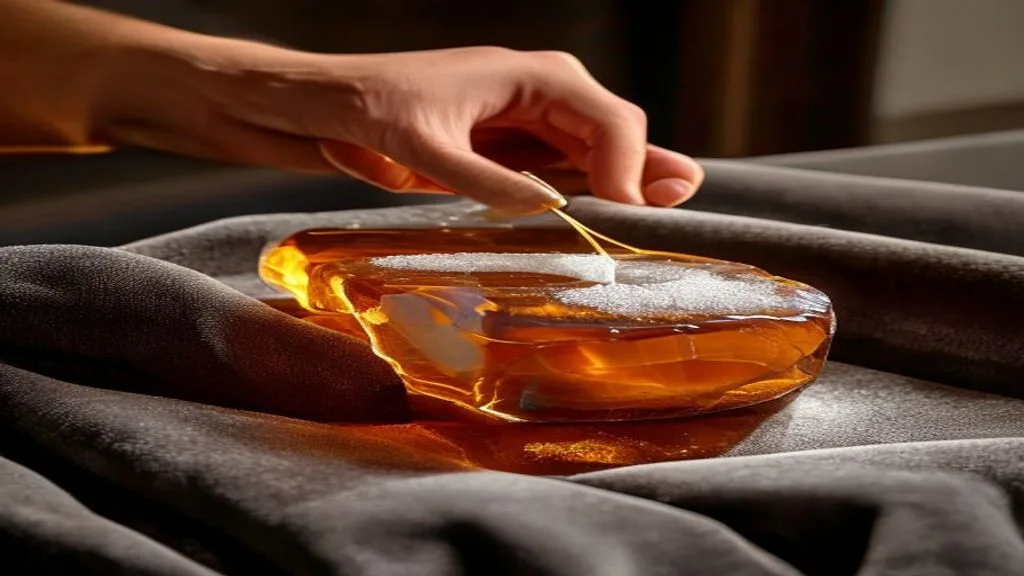
The short version: A quality amber resin paperweight is built to last decades, but a few simple care choices stretch that to a lifetime. The chemistry of polyester resin is straightforward, it resists water and most household contaminants, but it has specific weaknesses (certain solvents, prolonged UV exposure, sharp impacts).
A quality amber resin paperweight is built to last decades, but a few simple care choices stretch that to a lifetime. The chemistry of polyester resin is straightforward, it resists water and most household contaminants, but it has specific weaknesses (certain solvents, prolonged UV exposure, sharp impacts). Knowing those weaknesses lets you display the piece confidently anywhere and clean it without damaging the polish. Here's the complete short guide.
What polyester resin actually is
Most amber-coloured paperweights and fossil replicas are made from polyester resin, a thermoset polymer that hardens irreversibly when mixed with a catalyst. The resin is poured into a mould, the catalyst triggers polymerisation, and the result is a hard, optically clear material that takes a polish well.
Polyester is the standard for budget-to-mid-range resin pieces. Higher-end manufacturers use epoxy resin, which is more expensive but optically clearer and more impact-resistant. Both materials respond to care the same way.
Once cured, the surface is chemically stable. It doesn't react with water, mild detergents, or skin oils. It does react with certain organic solvents, alcohol, acetone, and some industrial cleaners, which can cause clouding or surface dulling.
Cleaning safely
Day-to-day: a soft microfibre cloth, dry. Wipe in a single direction, not circles. Microfibre captures dust without scratching.
When dusting isn't enough: warm water with a single drop of mild dish soap (Dawn, Fairy, etc.) on a microfibre cloth. Wring out so it's damp not wet. Wipe gently, then dry immediately with a clean dry cloth.
Stuck-on residue (tape adhesive, candle wax, fingerprints from someone who'd been handling food): warm soapy water and patience. Don't pick at it with anything sharp. If soap fails, a small amount of warm vegetable oil on a cloth lifts most residues without harming the resin.
Never use: rubbing alcohol, acetone, nail polish remover, ammonia-based cleaners (Windex), abrasive cleaners (Bar Keepers Friend, baking soda), or solvent-based household sprays. All of them can cloud or etch the polished surface.
Display: where to put it
Premium UV-stable resin is fine in direct sunlight indefinitely. The amber tint is part of the resin's chemistry and isn't affected by UV. Lower-quality resin (typical of cheap novelty pieces) yellows in 12-18 months of full afternoon sun.
If you're not sure which grade you have, hedge: indirect light or partial sun is safe for any resin. East-facing windowsills get gentle morning light. North-facing surfaces never see direct sun and are safest. South- and west-facing surfaces are the riskier choices.
Heat is more of a concern than light. Don't place resin pieces on top of a radiator, near a heating vent, or on a closed car dashboard. Prolonged heat above 60°C (140°F) can cause slow distortion. Normal room temperatures and brief sun exposure are fine.
Longevity expectations
Properly cared for, a quality polyester resin piece holds its appearance for 30-50+ years. Epoxy resin lasts even longer. There's no specific 'expiry' for cured resin, it's a chemically stable solid.
What causes pieces to age poorly is not the resin itself but the finish. Polished surfaces dull over decades with rubbing and dust accumulation. Light buffing with a microfibre cloth and a tiny amount of plastic polish (Novus #2 or similar) restores the gloss.
The wooden or stone bases that come with many pieces have shorter lifespans. Solid hardwood bases last decades; veneered or composite bases may delaminate after 10-15 years of handling. Replacing a damaged base is easy ($10-$20 from a craft supplier) and refreshes the piece.
If you have multiple pieces
Don't stack them. Hard resin against hard resin scratches both pieces. If you have a collection of small resin paperweights, display them on individual small bases or in a divided shadow box.
Rotate. Even with UV-stable resin, prolonged exposure to one specific light angle can cause subtle differential aging. Rotating pieces every few months (or seasonally) keeps them aging evenly.
Photograph them. A simple phone photo of each piece, with a note of where you bought it and any provenance info, is useful for insurance and for memory. The provenance of natural-history pieces is part of what makes them meaningful; documenting it is part of caring for the collection.
Frequently asked questions
Can I clean amber resin with alcohol?
No. Isopropyl alcohol, acetone, and most strong solvents cloud the polished surface of polyester resin. Use warm water with a drop of mild dish soap on a soft microfibre cloth. Wipe gently in one direction, not in circles.
Will amber resin yellow over time?
Premium UV-stable resin (used by quality manufacturers) holds its colour for decades. Lower-grade resin yellows in 12-18 months of direct sun. Look for 'UV-stable' or 'archival' in the product description. If you're unsure, keep the piece in indirect light.
Can it survive direct sunlight?
Quality UV-stable amber resin can sit in a sunny window for years. The amber colour is part of the resin formulation and isn't affected by UV. Lower-quality resin yellows or cracks under prolonged UV, keep cheaper pieces away from direct afternoon sun.
What happens if it gets scratched?
Small scratches can be buffed out with a polishing cloth and a tiny amount of jeweller's polish. Deep scratches require professional resin restoration. For everyday safety, keep amber pieces away from coins, keys, and other hard objects.
How do I store one I'm not displaying?
In a soft cloth pouch, padded with bubble wrap or foam, in a stable-temperature environment. Avoid attics (heat) and basements (humidity). Resin doesn't degrade in storage but can scuff against hard surfaces.