As an Amazon Associate, VEOJEIN earns from qualifying purchases made through links on this site. This never changes the price you pay.
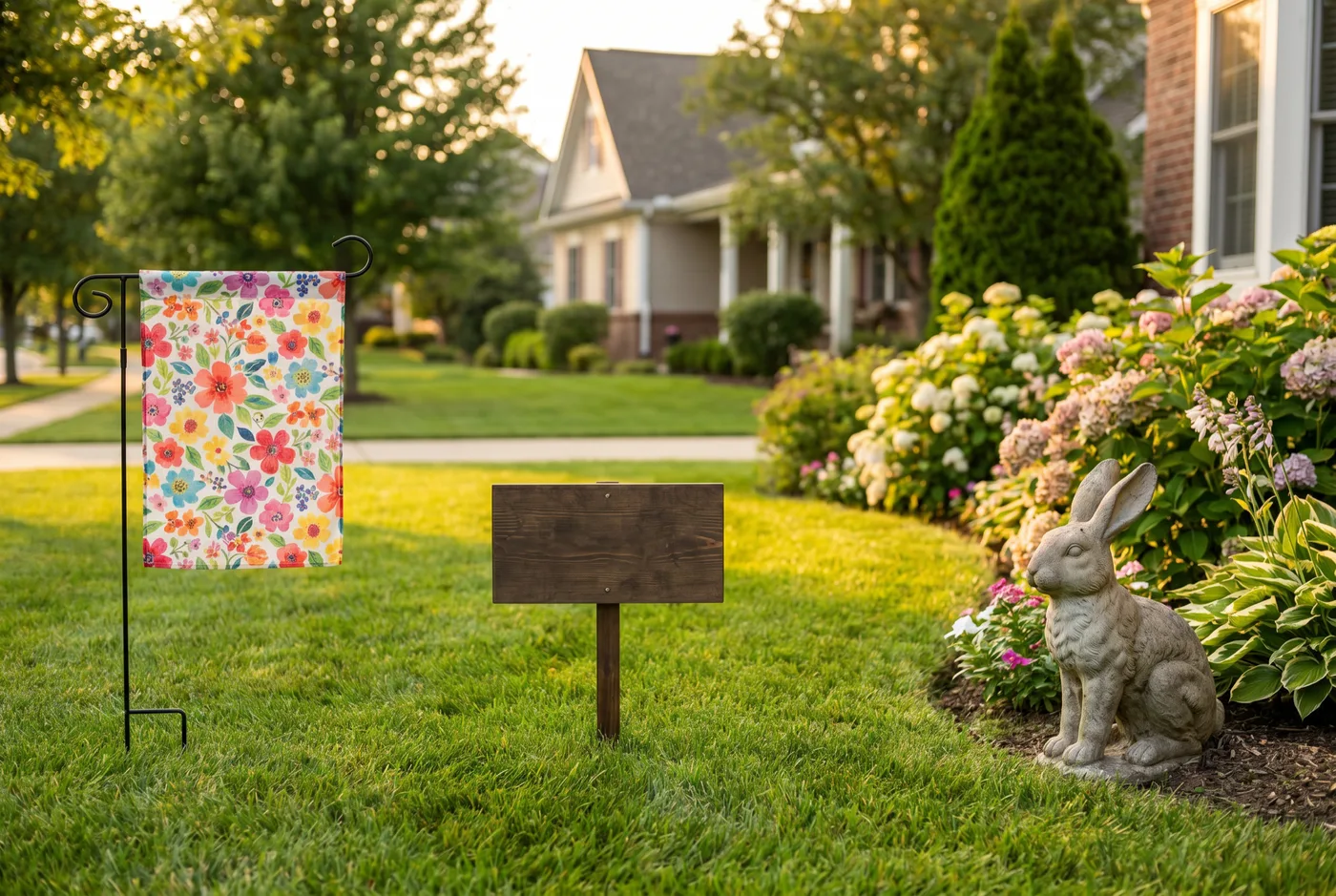
The short version: Garden flags ($4 to $15) are cheapest, easiest to rotate seasonally, last 1 to 5 years depending on quality. Yard signs ($15 to $50) are bolder, more readable, last 2 to 7 years. Lawn statues ($30 to $300+) are most permanent, weather best, last 10+ years. Pick flag for seasonal rotation, sign for year-round messaging, statue for a permanent fixture.
Walk through any neighborhood and you'll see three flavors of yard decor: little fabric garden flags on metal stands, larger printed yard signs (often political or seasonal), and lawn statues (gnomes, owls, angels, animals). Each one signals something about the household, costs different money, and lasts different amounts of time. Choosing between them isn't about taste alone, it's about what the yard NEEDS. This guide walks through what makes each one work, when each one fails, and which is right for which yard.
Garden flags: cheap, rotatable, seasonal
Garden flags are small fabric panels (typically 12 by 18 inches) on a thin metal stand pushed into the soil. They flutter in the breeze, change with the seasons, and add a small splash of color to a yard without permanent installation.
Strengths: cheapest yard decor by far ($4 to $15 for a single flag, $25 to $40 for a 12-pack covering the whole year), easiest to swap (30 seconds to change, no tools), small footprint, can be installed in a flower bed without damaging anything.
Limits: small visual impact (most flags are barely visible from 30+ feet), durability varies wildly ($4 flags fade in one summer; $12 flags last 3 to 5 years), wind damage is common (a strong storm bends the stand or shreds the fabric), need a 6-week off-rotation in winter or extreme summer or they degrade fast.
Best for: front yards with a path or flower bed where someone passes close, households that enjoy seasonal change, anyone wanting decor that costs under $40 for a full year of rotation.
Yard signs: bigger, louder, more readable
Yard signs are larger printed panels (typically 18 by 24 inches or larger) on a metal stake, designed to be readable from the street. Most common uses: political messages, real estate, school spirit, holiday greetings, business announcements.
Strengths: more readable than a flag (legible from 30+ feet), bolder visual presence, more durable in wind (the stake is sturdier and the printed panel doesn't flutter), available at hardware stores or print-on-demand services in any custom design.
Limits: more expensive than flags ($15 to $50 each), most don't have weatherproof printing (color fades after 2 to 3 outdoor seasons), can read as 'political' or 'tacky' depending on the message and the neighborhood, harder to swap (a sign change feels more deliberate than rotating a flag).
Best for: yards with longer setbacks (the sign is meant to be read from the street), households with a year-round message, situations where the visual impact matters more than seasonal rotation.
Lawn statues: permanent, weatherproof, character-defining
Lawn statues are three-dimensional outdoor sculptures: gnomes, owls, angels, animals, abstract pieces. Made of cast resin, weatherproof concrete, stone, or treated wood. Once installed, they stay.
Strengths: longest-lasting (10+ years for quality cast resin, decades for stone), most visual character (a good owl statue defines the corner of a garden in a way nothing else can), weatherproof by default (designed for outdoor permanence), no batteries, no maintenance, just there.
Limits: most expensive ($30 to $300+ for a quality piece), hardest to relocate (heavier pieces are 20 to 50 pounds), can feel committed (some people change their mind about gnome aesthetics after a year), the wrong style can dominate a small yard.
Best for: yards with an empty corner or unfilled flower bed, households with a specific aesthetic (cottagecore, modern minimalist, fairy garden), situations where the family wants ONE long-lived decor element rather than ongoing rotation.
The side-by-side comparison
| Attribute | Garden Flag | Yard Sign | Lawn Statue |
|---|---|---|---|
| Price (per piece) | $4-15 | $15-50 | $30-300+ |
| Typical lifespan outdoors | 1-5 yrs | 2-7 yrs | 10+ yrs |
| Readability distance | Up to 15 ft | 30 to 80 ft | Visual at 50+ ft, no text |
| Wind tolerance | Low | Medium | High |
| Rotation flexibility | High (swap weekly) | Low (sign at a time) | None (permanent) |
| Footprint | 3 inch stake | 6 inch stake + sign | 1 to 3 sq ft base |
| Annual cost (12-month rotation) | $25-40 (12-pack) | $40-80 (2-3 signs) | Amortized to ~$3-30/yr |
| Best location | Front path, flower bed | Curb-facing lawn | Garden corner |
| Personality match | Welcoming, seasonal | Loud, expressive | Quiet, intentional |
Three pick-by-scenario recommendations
If you want seasonal rotation that costs under $40 a year: garden flag, 12-pack. The cost-per-month math is unbeatable, and the family can take turns picking which one to fly each month.
If you have something specific to say to the street year-round (politics, school, religion, milestone): yard sign. Pay for one quality printed sign at $30 to $50; expect to replace every 3 to 5 years as ink fades.
If you have an empty spot in the yard that the eye keeps landing on and the answer should be permanent: lawn statue. Pay $50 to $150 for a quality cast resin piece; it'll outlast 2 to 3 of the cheaper alternatives combined.
Hybrid approach (what most homes end up with): a permanent owl statue in one corner, a garden flag near the path that rotates seasonally, no yard sign unless there's a real reason to have one.
Frequently asked questions
Can I use a garden flag in winter?
Yes, but rotate to a winter-specific flag (cardinal, snowflake, evergreen) and take it inside during heavy storms. Cheap flags fail in snow load; quality polyester flags survive most winters.
Do yard signs annoy neighbors?
Depends on the message. Political signs near elections: yes, often. Holiday or business signs: rarely. School-spirit signs: rarely. If you live in an HOA, check the rules; many have size limits or duration limits.
Will a lawn statue scare away birds or pets?
Some lawn statues are designed to do exactly this (owl statues deter squirrels and small birds, snake-shaped statues deter rodents). Most decorative statues don't affect wildlife meaningfully after the first few days.
How do I stop my garden flag from blowing into the neighbor's yard?
Buy a stand with a heavier base (4 to 6 inches into the soil minimum), use a flag with reinforced edges, and choose flags with wind vents (small slits that let pressure escape). Cheap flags on light stands are designed to fail.
Can I mix all three in one yard?
Yes, and many gardens are designed that way: a permanent statue as the focal point, a rotating flag near the path for seasonal cheer, and a yard sign reserved for special occasions (birthdays, graduations, real estate). The variety reads as 'lived-in' rather than 'decorated'.