As an Amazon Associate, VEOJEIN earns from qualifying purchases made through links on this site. This never changes the price you pay.
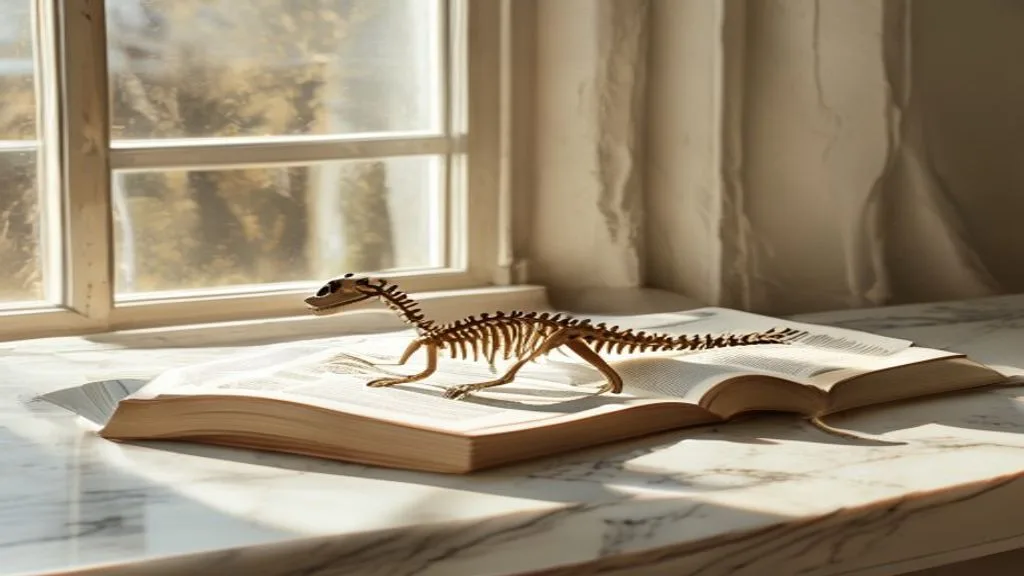
The short version: Twelve dinosaur species do almost all the cultural work. They show up in films, in children's books, in museum gift shops, and on the labels of every fossil replica you've ever seen. Knowing which is which makes you a better gift-giver, a sharper museum visitor, and a more informed buyer of natural-history décor.
Twelve dinosaur species do almost all the cultural work. They show up in films, in children's books, in museum gift shops, and on the labels of every fossil replica you've ever seen. Knowing which is which makes you a better gift-giver, a sharper museum visitor, and a more informed buyer of natural-history décor. This is the cheat-sheet, short, accurate, and arranged the way a paleontologist would teach you over a coffee.
Tyrannosaurus rex, the famous one
T-Rex lived 68 to 66 million years ago in what is now western North America, mostly Montana and the Dakotas. Adults reached 40 feet (12 metres) nose to tail and weighed roughly 8-9 tons. The bite force was an estimated 8,000 pounds per square inch, the strongest of any known land animal.
Two distinctive features for spotting good replicas: the arms are tiny relative to the body (about 3 feet long, with only two functional fingers) and the head is enormous (5 feet long). Cheap replicas often exaggerate the arms or shorten the head. Real T-Rex skulls are massive and tapered.
The species had small but extremely keen eyes and excellent depth perception, more like a hawk than a lizard. Recent CT scans of preserved braincases suggest T-Rex was unusually intelligent for its size.
Triceratops, the three-horned plant eater
Triceratops shared the late Cretaceous with T-Rex and was likely its main prey. Adults grew to 30 feet long and weighed up to 12 tons. The defining features are the three horns (two long brow horns, one shorter nose horn) and the massive bony frill behind the skull.
The frill function is still debated. Older theories said it was armour against predators. Newer ones lean toward display, attracting mates and intimidating rivals of the same species. The frill is often pierced by holes in adult specimens, which would be useless armour, so the display hypothesis is stronger.
Good replicas show the frill as roughly the same height as the rest of the skull combined. Cheap ones shrink it.
Velociraptor, small, feathered, fast
The real Velociraptor was a far cry from its film portrayal. It lived about 75 million years ago in what is now Mongolia. Adults were turkey-sized: 6 feet long but only 3 feet tall, weighing 30-35 pounds. The body was covered in feathers, the tail was stiff and straight, and the wings (yes, wings) were too short to fly with, they were probably used for display and balance during fast turns.
A famous 1971 fossil from the Gobi Desert preserves a Velociraptor locked in combat with a Protoceratops, both buried mid-fight by a collapsing sand dune. The fossil is one of the most photographed in the world.
Brachiosaurus and the long-necked giants
Sauropods, the long-necked, four-legged giants, are the largest animals to have ever walked on land. Brachiosaurus stood about 40 feet tall and weighed 30-50 tons. Argentinosaurus, found in South America, may have weighed 80 tons. To put it in perspective, an adult elephant weighs 5-6 tons.
Sauropods held their necks roughly horizontal, not vertical. This took decades for paleontologists to figure out: a vertical neck would require a heart capable of pumping blood up against gravity to a brain 40 feet above the ground, which is biomechanically implausible.
Stegosaurus, the spike-tailed plate-back
Stegosaurus lived 155 million years ago, about 90 million years before T-Rex. The plates running down its back probably weren't armour (they were too thin) but heat-exchange surfaces, used to dump heat in the sun or absorb it in the cool morning.
The tail spikes, informally called the "thagomizer", were defensive weapons used against predators like Allosaurus. The name comes from a 1982 Far Side cartoon by Gary Larson and was later adopted by actual paleontologists, who liked it.
How to spot a bad replica
Five tells of a poor-quality dinosaur replica: the tail drags on the ground instead of holding horizontal; T-Rex arms are too large; sauropods are shown with vertical necks; teeth or claws are unrealistically uniform; or there's exaggerated cartoonish colour.
A good replica uses muted, plausible colours (greens, browns, slate greys), correct postures, and proportions that match published scientific reconstructions. The high-end versions are usually based on direct collaboration with paleontologists.
Frequently asked questions
Which is the most popular dinosaur?
Tyrannosaurus rex by a wide margin. It's been the most popular dinosaur in surveys since the 1930s. The combination of size (40 feet long, 12 feet tall at the hip), age (one of the last species before the K-Pg extinction), and good preservation in North American fossil beds keeps it dominant in public imagination.
Did Velociraptors really look like the ones in dinosaur films?
Not really. Real Velociraptors were roughly turkey-sized, about 3 feet tall, with feathered bodies and a long stiff tail. The large reptilian "raptors" in 1990s dinosaur films are based on Deinonychus or Utahraptor, with the Velociraptor name applied for branding reasons. The book's author has acknowledged this.
Were dinosaurs warm or cold blooded?
The current scientific consensus, based on bone histology and metabolic studies, is that most dinosaurs were warm-blooded or somewhere in between. Birds, descendants of theropod dinosaurs, are fully warm-blooded, and bone-growth analysis of large theropods suggests their ancestors were too.
What killed the dinosaurs?
An asteroid roughly 6-9 miles across struck what is now the Yucatán Peninsula 66 million years ago, leaving the Chicxulub crater. The impact and its aftermath, global wildfires, debris-blocked sunlight, climate disruption, drove the K-Pg mass extinction. Non-avian dinosaurs were among the casualties; birds (technically dinosaurs) survived.
How accurate are dinosaur reconstructions in films?
Increasingly accurate. Modern paleontology shows most theropods (T-Rex, Velociraptor, etc.) had at least some feathers. Tail postures are now understood to be roughly horizontal, not dragged. Skin colour is mostly speculation but recent specimens with preserved melanosomes have revealed patterning in a few species.