As an Amazon Associate, VEOJEIN earns from qualifying purchases made through links on this site. This never changes the price you pay.
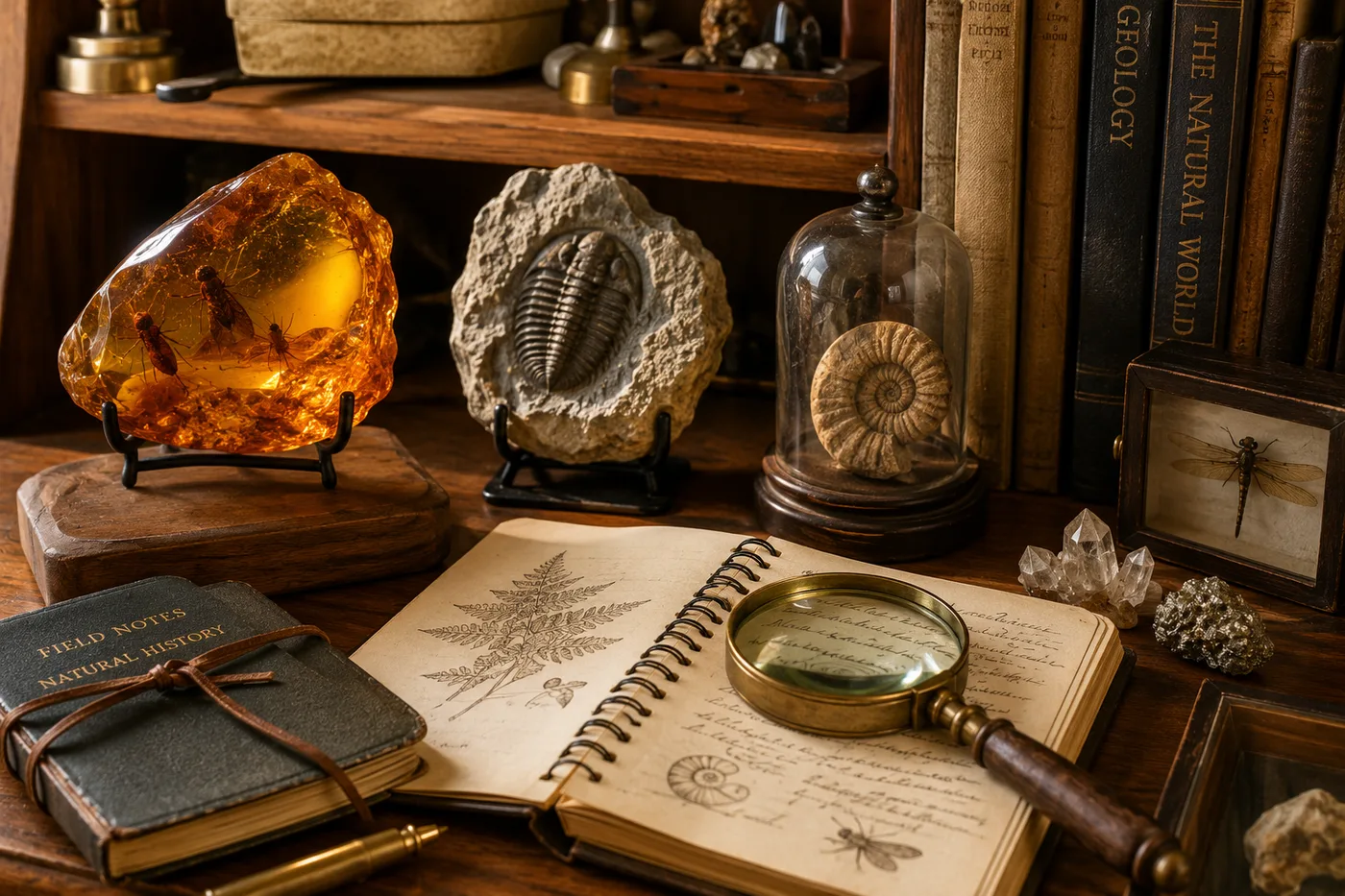
The short version: Collecting natural history is one of the oldest hobbies in the world. It used to require expeditions, museum connections, and serious money. Today, you can build a credible small collection, fossils, amber pieces, polished minerals, dried botanicals, for a few hundred dollars total.
Collecting natural history is one of the oldest hobbies in the world. It used to require expeditions, museum connections, and serious money. Today, you can build a credible small collection, fossils, amber pieces, polished minerals, dried botanicals, for a few hundred dollars total. The trick is knowing what to look for, what to skip, and how to assemble pieces that work together. Here's a buyer's guide to your first ten pieces.
The first piece: pick an anchor
Your first piece sets the tone for everything else. It should be substantial enough to be the focal point of a small shelf, visually striking enough to start conversations, and within your budget at the high end of what you'll spend per piece.
Three strong choices for the anchor position: a high-quality amber resin replica with a 3D mosquito or insect inclusion ($25-$40), a dinosaur footprint cast 8-10 inches long ($25-$45), or a polished ammonite fossil 3-5 inches across ($20-$40, real).
Avoid starting with a small piece. A 1-inch shark tooth or a small polished stone is fine as the second or third addition, but as a single object it doesn't anchor a shelf, it looks lonely.
Build outward in categories
After the anchor, add diversity, not duplication. Don't buy three amber pieces in a row. Move to different categories: a mineral specimen, a fossil from a different era, a botanical preservation, a geological curiosity.
A balanced 10-piece collection might include: 2-3 amber resin pieces (different sizes), 2 real fossils (e.g., ammonite, fish), 2 mineral specimens (e.g., polished agate, pyrite cube), 1 dinosaur footprint replica, 1 small natural curiosity (a meteorite slice is $15-$25 and adds gravity), and 1 vintage scientific instrument (a Victorian-style brass compass or magnifier).
Each piece should feel deliberate. If you can't articulate why you chose it, skip it. Curating means saying no more than yes.
What to skip at the start
Anything dyed or 'enhanced'. Some retailers add colour to ammonites or amber. Real specimens have the colour they have. Dye is a tell that the piece is being marketed rather than presented.
Anything without provenance. A reputable seller will tell you where a fossil came from. 'Morocco, late Devonian' is provenance. '500-million-year-old fossil' is marketing.
Very small pieces. A 1-inch fossil disappears on a shelf. Wait until you have 3-5 anchors before adding small pieces.
Theme-park-quality replicas. Bright-coloured plastic dinosaurs and similar gift-shop items don't read as serious natural history. They demote the rest of the collection.
Display: shelf and lighting
A 10-piece collection works on a single 36-inch shelf with breathing room between pieces. Crowded shelves look chaotic; sparse shelves look intentional.
Lighting is the single biggest improvement you can make. A small warm-temperature lamp positioned at table height brings out colour and shadow in stone and resin. Cool overhead lighting flattens everything and makes resin look plastic. Spend $40 on a brass desk lamp and the collection becomes 30% more striking.
Bases matter. A small wooden plinth, a slate slab, or a brass disk under a piece lifts it visually and signals 'object of note' rather than 'rock on a shelf'. Bases are cheap ($5-$20) and significantly improve composition.
How the collection should evolve
After 10 pieces, you'll have opinions. Some categories will feel more interesting than others. Follow those. A natural-history collection that turns into a focused fossil collection is more meaningful than one that stays broad.
Rotate. Even a 15-piece collection should display 10 at a time. Store the rest, swap seasonally. The cycle keeps the display fresh and lets you re-examine each piece when it comes back out.
Buy slowly. The collection should reveal itself over years, not be completed in a month. A piece a quarter is plenty. Sustained, deliberate accumulation is what separates a collection from a shopping list.
Frequently asked questions
How much should I expect to spend?
A respectable starter collection of 10 pieces can be assembled for $150-$400. Individual pieces range from $10 (polished agate) to $50 (high-quality amber resin replica). Spending more isn't usually better, at the entry level, taste and curation matter more than budget.
Where do I buy from?
Three reliable sources: specialty natural-history retailers (better quality, more provenance); museum gift shops (often the best replicas, ethically sourced); curated artisan platforms (Etsy with seller reviews, or brand-direct sites). Avoid generic Amazon listings without provenance info.
Real fossils or replicas?
Mix both. Inexpensive real fossils (small ammonites, fish from Wyoming, shark teeth) are widely available for $10-$30 and ethically mined. Larger or more dramatic specimens (a dinosaur footprint, a complete trilobite) are better as replicas, the price and ethics get complicated fast for real ones.
Do I need to know anything about geology?
No. A basic field guide ($15) and 30 minutes of reading per acquisition is plenty. You'll learn organically as you collect. Specialised geological knowledge becomes useful around the 30-50 piece mark, not at the start.
Is it ethical to collect natural history?
Generally yes, most commercial fossils and minerals come from legal, ethical sources. The exceptions: ivory (avoid entirely), Burmese amber (mining ethics are complicated), and any specimen without provenance documentation. Reputable retailers disclose where specimens come from.